
A screen count isn't an environment
A screen count tells you how many places an ad can run. It doesn't tell you whether anyone sees the ad or whether it fits the place.
We plan each property as a whole: the entrances, the parking, the concourses, the dining and the route people take from their car to the store. Programmatic demand is welcome, but it isn't a plan.
How we build one
- Read the property. Traffic flow, dwell points, sightlines, tenant mix and events.
- Choose the mix. Digital kiosks, walls, LED screens, spectaculars, pylons, EV Totems™, static displays, and sponsorship and experiential space, whatever fits that property.
- Shape it with the owner. The owner approves every placement, and the look suits the center.
- Keep it working. The screens also carry the property's leasing, tenant and event messages.
What advertisers get
- National brands: many touchpoints in one place, along the path to purchase.
- Local businesses: a spot where nearby customers already shop, starting with one venue.
- Retailers and tenants: a message seen steps from the store.
What the property gets
- New revenue: from the visitors you already have.
- A stronger center: a property that looks current and stands out from others.
- Your own messages: leasing, tenant promotions and events on the same screens.
- Hardware: for properties that meet our criteria, we fund the screens and installation site by site.
One example
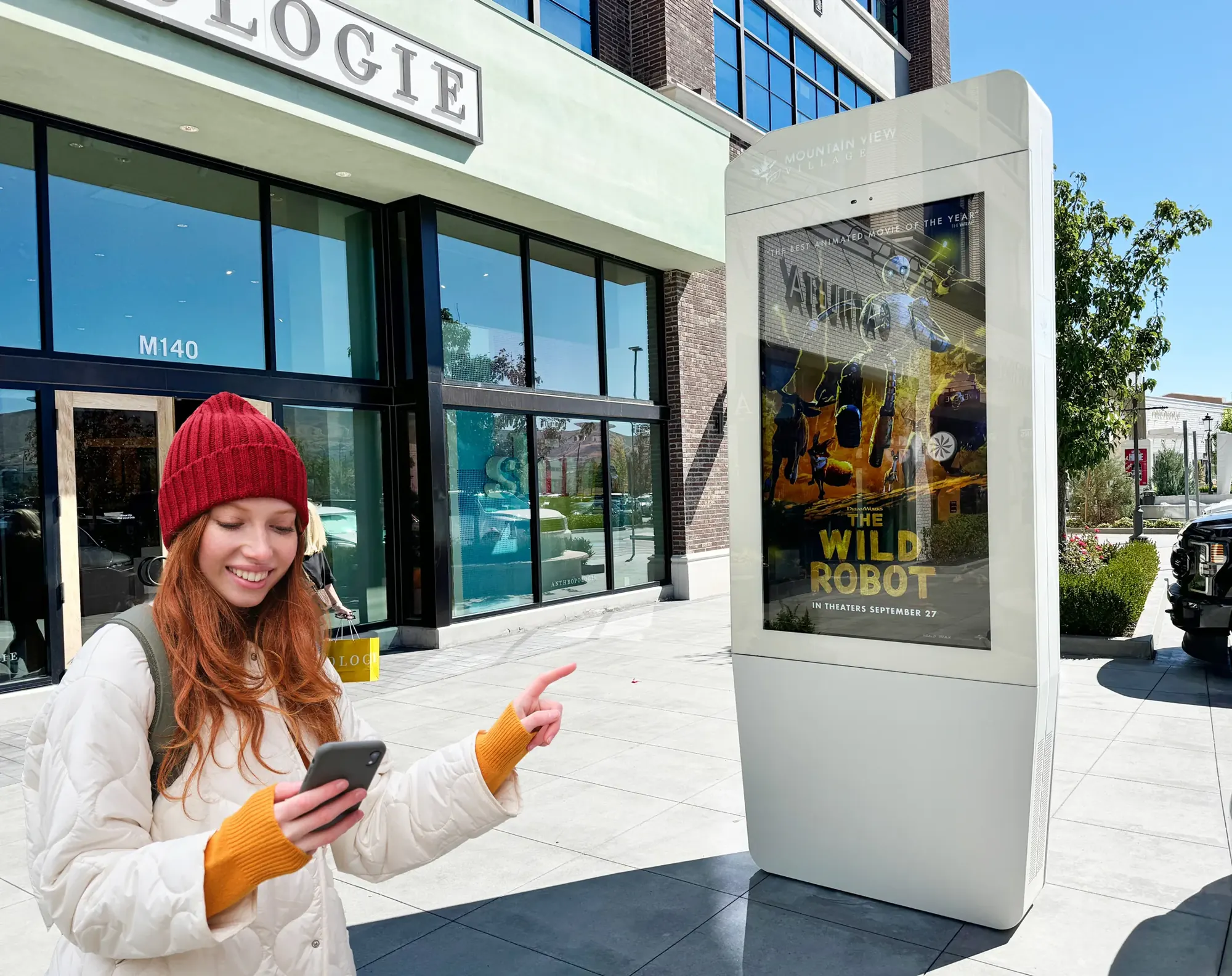
Mountain View Village in Riverton, Utah has 34 ad faces across six formats, from digital kiosks and walls to EV charger displays, LED screens, a pylon billboard and a spectacular.
Common questions
What is a media environment?
A media environment is a property planned as a whole for advertising: the right mix of formats, placed along the routes people take through the property, so ads are seen and the center benefits too.
How is that different from putting screens in a property?
Screens placed one by one rely on how many places an ad can run. A media environment starts with how people move through the property and chooses each placement and format to fit it.
Who is it for?
National brands, local businesses, and retailers and tenants at the property. Property owners benefit from new revenue, a center that looks current and screens that also carry their own messages.
Does the property owner approve the placements?
Yes. The owner approves every placement, and the screens can also carry the property's leasing, tenant and event messages.